
Kemball School
Communication
Intent
At Kemball School, the development and delivery of communication reflects our school mission:
To maximise each pupil's potential by enabling them to achieve as much independence as possible and to enjoy a quality of life that is both stimulating and rewarding.
We believe that communication is a fundamental human right and is central to learning, independence, relationships, and wellbeing. Our aim is to ensure that every pupil develops functional communication that meets their individual needs as learners and members of society. We provide meaningful opportunities for pupils to:
· Express opinions, preferences, thoughts, and feelings.
· Request what they want or need.
· Protest or reject undesired actions, activities, or events.
· Disagree, complain, negotiate, and resolve conflicts.
· Talk about personal experiences and the world around them.
· Self-advocate and make decisions about their own lives.
· Use communication to regulate themselves and their environment, and to direct or support others.
· Build, maintain, and develop positive relationships.
· Develop literacy skills that support communication across a range of contexts.
Communication development begins in the Early Years and continues throughout each pupil's journey at Kemball School. We aim to equip pupils with functional communication skills that can be used confidently across a wide variety of people, environments, and situations. Effective communication enables pupils to access learning, develop independence, participate in their communities, and thrive socially and emotionally.
Pupils at Kemball School present with a diverse range of physical, cognitive, sensory, and communication needs. As a result, they access learning experiences in different ways and require personalised approaches to communication. On entry to Kemball, some pupils may have limited or no spoken language, while others may experience physical or sensory barriers that affect how they communicate. Every pupil's communication profile is unique and informs the support, strategies, and resources provided.
Our intention is that every pupil progresses through school by developing a communication system that is effective, meaningful, and personalised. We strive to ensure that every pupil can communicate what they want to say, when they want to say it, to the people they choose, using the communication methods that best meet their individual needs. This may include speech, gesture, signing, symbols, communication books, eye gaze, voice output communication aids, or other forms of augmentative and alternative communication (AAC).
Through a Total Communication approach, we create an environment where every pupil is listened to, understood, and empowered to communicate with confidence, enabling them to participate fully in school life and beyond.
Implementation
At Kemball School, we use a Total Communication approach. This means that we identify and use the most effective combination of communication methods for each individual pupil. By tailoring communication to each learner, we help pupils make meaningful connections, experience successful interactions, and develop their ability to exchange information and engage in conversations. Using a range of complementary communication methods reinforces understanding and strengthens meaning.
Communication and language are considered across three key areas:
· Listening and Attention (Receptive Communication)
· Understanding (Receptive Communication)
· Speaking (Expressive Communication)
Listening and Attention
Listening and attention activities are carefully planned to meet the individual needs of our pupils. For some, these skills are developed through the English curriculum, while others receive targeted opportunities, particularly pupils with hearing or visual impairments. Some pupils are supported by the Local Authority Hearing Impairment (HI) and Visual Impairment (VI) Teams. To support pupils with hearing impairments, every classroom is equipped with a sound field system, helping to improve access to spoken language and classroom learning.
Understanding
At Kemball School, we support understanding by using a range of alternative communication methods alongside spoken language during daily routines. This helps pupils make sense of what is happening around them and promotes greater independence.
Depending on the needs of the learners, we use a combination of:
· Symbols
· Makaton
· Objects of Reference
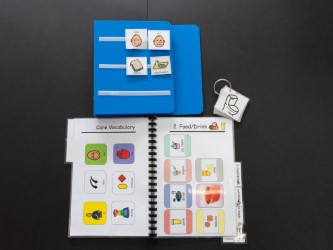
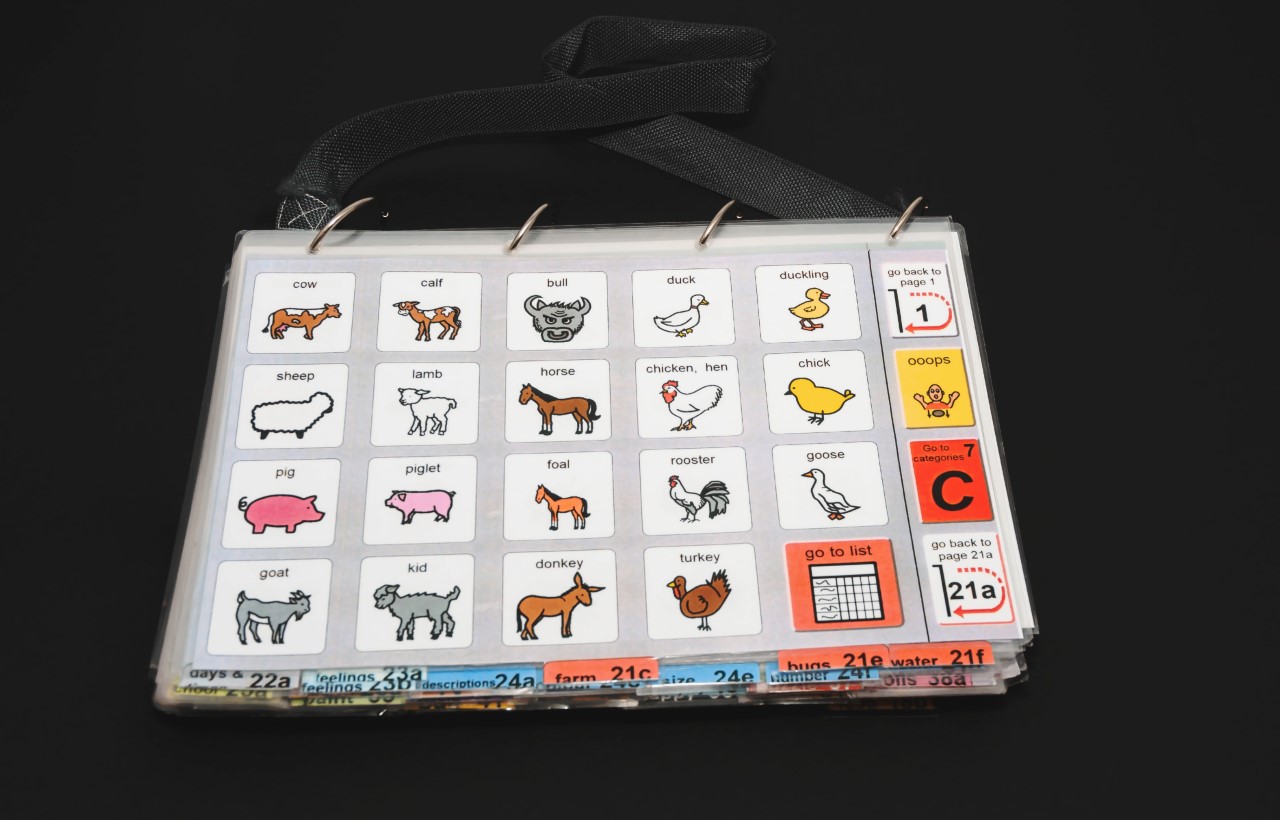
Each class within the EYFS and Engagement Pathway (and the Progression and Functional Pathways where appropriate) has a class communication book. These books are used throughout the day to model language and encourage meaningful communication in a range of contexts.
Expressive Communication
At Kemball School, we recognise that 'speaking' can take many forms and is not limited to verbal speech. Pupils are supported to communicate in ways that best meet their individual needs, enabling them to develop functional communication skills and
express themselves effectively. Some pupils receive targeted one-to-one communication sessions, while others participate in group-based interventions, which promote both verbal and non-verbal communication.
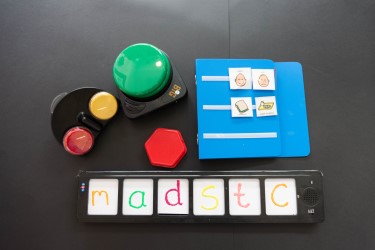
Where appropriate, pupils use a range of Alternative and Augmentative Communication (AAC) systems, including:
· Objects of Reference
· Makaton
· Communication books
· Aided Language Displays
· PODD books
· AAC devices
· PECS
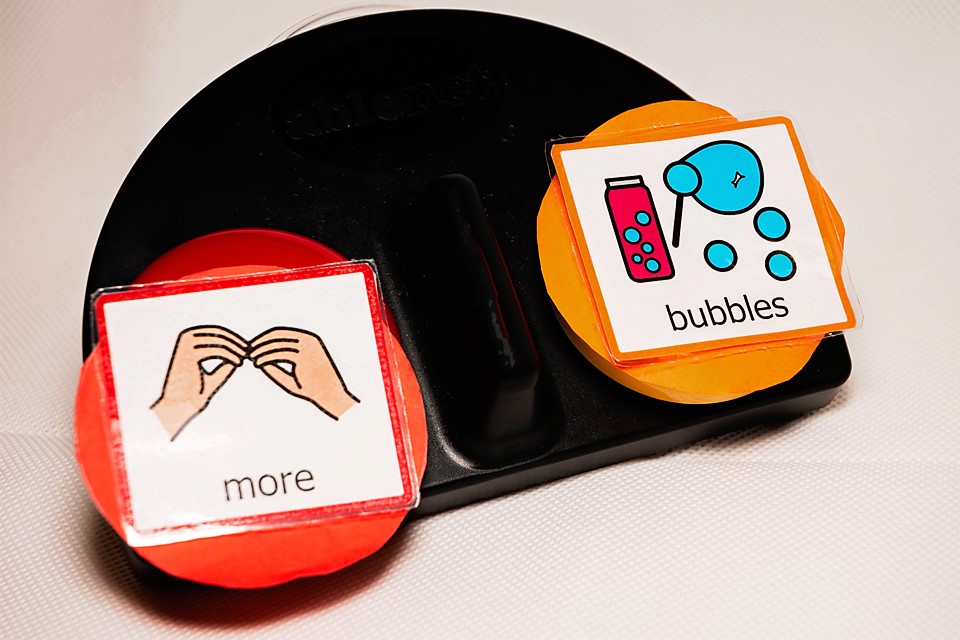
· Switches
· TaSSeLs
· Intensive Interaction
Communication Across the School Day
Communication skills are taught every day and are embedded throughout all aspects of school life. In addition to discrete communication sessions, pupils are encouraged and supported to communicate during lessons, play, routines and social interactions, ensuring communication is meaningful and purposeful throughout the day.
We work closely with parents and carers to promote consistency between home and school. Whichever communication system a pupil uses in school is encouraged at home wherever possible. To support this partnership, we offer individual training sessions as well as parent workshops, enabling families to develop confidence in using their child's communication system and helping pupils communicate successfully across all environments.
Impact
Pupils at Kemball School are effective communicators. They are encouraged to use their individual communication methods to express their needs, make choices, and communicate their wants and preferences. Through consistent opportunities to develop their communication skills, pupils build confidence, increase their independence, and become as autonomous as possible in their interactions with others.